
Aerospace parts may begin as flat sheet, but the finished component has to do far more than hold its shape. Each manufacturing step has to preserve the dimensions and surface condition the final assembly depends on. That is why aerospace sheet metal fabrication works best as a coordinated process, with design decisions shaped by the steps that follow in production. Planning that way helps engineering and procurement teams reduce rework while protecting part quality throughout production.
Define the Part Before Production Begins
Aerospace fabrication starts with the drawing, but a drawing alone does not guarantee an efficient manufacturing plan. Material, geometry, joining methods, finish requirements, and end-use conditions all influence how a part should move through production. Reviewing those factors early in the process gives the manufacturing team a chance to identify features that may create problems later.
Design-for-manufacturability (DFM) review is especially useful at this stage. Tight bend locations may limit tool access, while nearby holes or hardware can complicate forming. A weld joint that looks simple in a model may be difficult to reach once you work with the completed part.
Early review should confirm details such as:
- Material and sheet thickness
- Bend direction and tooling access
- Hole, slot, and cutout locations
- Weld and hardware requirements
- Finish and masking requirements
- Inspection points and critical drawing features
Resolving these details before release creates a cleaner path into production. It also gives both teams a shared view of critical features and available manufacturing flexibility. That alignment can keep small design decisions from becoming larger production issues.
Plan Cutting and Forming Around the Part
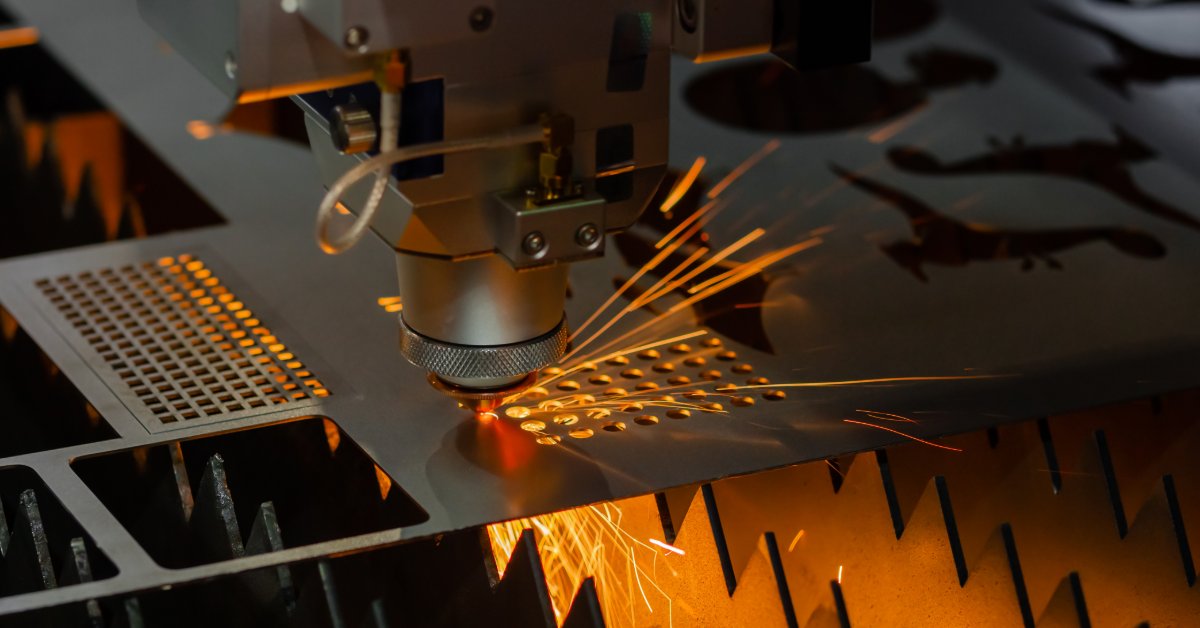
Once the design is ready, cutting establishes the geometry that later operations have to preserve. Laser cutting and punching can create accurate profiles and openings, but programming and the setup still have to match the drawing. An error introduced here becomes harder to correct after the part is bent or welded.
Forming adds another layer of complexity because sheet metal does not behave like a perfectly rigid material. Material thickness and grain direction can affect how a bend forms. Springback and the chosen bend sequence also influence whether the finished geometry lands where the drawing requires.
That is why process planning matters as much as machine capability in aerospace sheet metal fabrication. The manufacturer must consider how each bend affects the next operation and whether the completed shape will support downstream welding or assembly. Viewing those steps as one connected process helps protect dimensional consistency and reduces the need for late-stage adjustments.

Plan Welding and Hardware Around the Assembly
Welding and hardware installation can change a part that was already dimensionally correct. Localized heat from welding may introduce distortion, while installed hardware can interfere with later forming or finishing if it is added at the wrong point. Plan both operations around the complete assembly rather than treating them as isolated steps.
The welding process should match the material and joint design while accounting for access and drawing requirements. Gas tungsten arc welding (GTAW), often called tungsten inert gas (TIG) welding, provides precise heat control for many thin-sheet applications. Other welding methods may be better suited to different materials or production conditions.
Fixturing and weld sequence help maintain alignment as heat enters the assembly. The same planning applies to inserted hardware because the location and installation timing can affect fit and finishing. Coordinating these steps early protects the work completed during cutting and forming and reduces the chance of creating a new problem while solving another one.
Protect Surface Conditions Through Finishing
Aerospace components can pass through several work centers before finishing, so surface condition needs attention throughout production. Scratches or contamination may create problems that only become obvious after applying a finish. Controlled handling and preparation reduce the chance that a surface issue becomes a rejection or rework event.
Review finish requirements before fabrication begins. Masked areas and grounding points may need special treatment. Threads, mating surfaces, and appearance requirements can also change the processing and handling of parts.
When those details are clear on the drawing or production documentation, fabrication and finishing teams can work toward the same result. This is one area where custom sheet metal fabrication benefits from in-house integration. Keeping fabrication, welding, finishing, inspections, and assembly within one coordinated workflow reduces handoffs and gives teams more visibility into how upstream decisions affect the final surface.
Verify Quality Before the Final Inspection
The final inspection matters, but waiting until the end to check a complex part creates unnecessary risks. In-process verification can identify a dimensional issue before additional work adds more time and value to a nonconforming component. The inspection plan should follow the drawing and focus on features tied to part performance and customer requirements.
A disciplined workflow may include:
- Verifying material and job documentation before production
- Checking cut features before forming
- Confirming formed geometry before welding
- Verifying weldments and hardware before finishing
- Inspecting completed parts against drawing requirements
- Maintaining required production and inspection records
These checkpoints make quality part of the production process rather than a final gate. They also help teams isolate where variation entered the workflow, supporting corrective action and more consistent repeat production.
For aerospace programs, documentation can be as important as the physical inspection itself. Revision control and clear inspection records support accountability across departments and production runs. The exact documentation requirements should come from customer requirements and the applicable drawing or quality system.
Coordinate Every Operation as One Manufacturing System
Aerospace sheet metal parts rarely depend on a single machine or department. Cutting and forming influence the work that follows, while welding can affect both finishing and final assembly. When teams plan those operations separately, small conflicts can build until they become schedule or quality problems.
An integrated manufacturing approach gives engineering teams a clearer view of the production route. Teams can address a welding-access problem during DFM review instead of after forming is complete. Likewise, teams can establish masking requirements before finishing rather than after a coated surface interferes with a mating feature.
The same coordination helps procurement and operations teams manage supplier risk. Fewer external transfers mean fewer handoffs to track, while one manufacturing partner can maintain continuity across fabrication and downstream processes. Integration does not replace process discipline, but it can make communication and accountability easier to maintain.
Build Aerospace Parts Around Process Discipline
Successful aerospace sheet metal work depends on more than precise equipment. It requires a manufacturing plan that connects design intent with process control from the first review through final inspection. When teams plan operations in sequence and address manufacturability early, they are better positioned to protect quality without adding unnecessary production complexity.
Sytech supports aerospace manufacturing with full-turnkey, in-house capabilities and an International Organization for Standardization (ISO)-certified quality system. Our team can support fabrication, welding, finishing, inspections, and assembly within one coordinated manufacturing environment. Contact us to review your aerospace drawings and determine how an integrated production plan can support the part from fabrication through the final assembly.