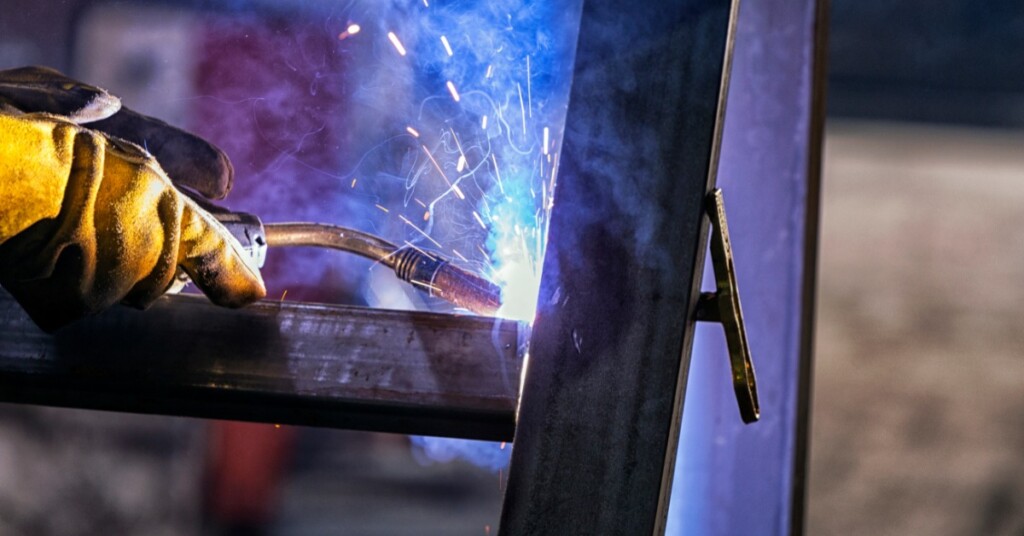
Structural welding plays a central role in building durable, load-bearing assemblies across industries like aerospace, medical, and industrial equipment. For teams new to the topic, understanding structural welding requires grasping how materials, joint design, and process control work together. Unlike light-duty welds, structural welds must hold up under real operating conditions and support long-term reliability.
Understand the Role of Structural Welding
Structural welding joins metal components that carry loads or maintain structural integrity under stress. These welds are not simply there to connect parts; they are engineered to perform under defined mechanical demands.
When done correctly, structural welds distribute forces across the joint, helping prevent fatigue, cracking, and deformation. This becomes especially important in assemblies exposed to vibrations, thermal cycling, or repeated loading.
Select the Right Joint and Filler Materials
The strength of a structural weld depends on both joint configuration and filler material selection. Each decision directly affects how the weld performs once the assembly is in service.
Common structural welding considerations include:
- Joint type selection
- Base metal compatibility
- Filler metal composition
- Welding processes
- Service environment factors
The filler metal bonds with the base material to create a joint that matches or exceeds the strength requirements of the application, while the welding process and environment determine how well that bond performs over time.
Control Heat Input and Distortion
Heat enables fusion, but it also introduces risk if not carefully managed. Excessive heat can distort components or alter material properties, while insufficient heat may lead to incomplete fusion.
Process control is central to structural welding. Welding parameters, part fit-up, and sequencing all influence the final result and overall dimensional accuracy.
To maintain consistency, fabrication teams typically rely on:
- Fixturing and clamping to stabilize components during welding
- Sequenced weld passes to distribute heat more evenly
- Preheating or post-weld treatment when required by material or thickness
- Inspection processes to verify alignment, weld quality, and tolerance control
These practices support repeatable results, especially in assemblies where precision and reliability are critical.
Integrate Welding Into the Manufacturing Process
Structural welding works best when it is considered as part of the full manufacturing workflow. Welding decisions affect cutting, forming, machining, finishing, and final assembly.
Early Design for Manufacturability (DFM) collaboration allows engineers to evaluate weld access, joint placement, and material behavior before production begins. This reduces unnecessary complexity and supports more efficient fabrication.
Strengthen Results Through Process Discipline
For teams approaching structural welding for the first time, strong results come from disciplined processes, material alignment, and close coordination between engineering and fabrication teams. Each step, from joint design to heat control, contributes to the final outcome.
When structural performance, compliance, and manufacturability are priorities, working with a partner that integrates custom welding fabrication with CNC machining, forming, and finishing makes a measurable difference. End-to-end, in-house capabilities support consistent quality across complex projects.
Sytech delivers structural welding as part of fully integrated fabrication services. Contact us to discuss your next project and ensure your assemblies meet structural requirements with precision and consistency from design through delivery.