Precision and quality drive successful fabrication in aerospace and medical manufacturing. Every project starts with choosing the right approach for cutting pipes and tubes, which shapes the outcome of your final assembly. With tight timelines and demanding specs, manufacturers look for the best mix of speed, accuracy, and reliability. Here’s a breakdown of four common techniques for cutting metal pipes and tubes to help you determine the most effective process for your operation.
Each technique offers unique advantages. Some shine in high-volume runs, while others excel in producing flawless edges for critical components.
Abrasive Wheel Cutting
Abrasive wheel cutting is a workhorse in many fabrication shops. Using a rotating wheel made from abrasive materials, it cuts efficiently and handles even tough alloys. This method delivers speed and works well when projects do not require close length tolerances.
The process produces substantial heat, creating a heat-affected zone (HAZ) along the cut. This can alter the material’s characteristics and typically requires extra deburring to clean the edges. Abrasive wheel cutting works best for parts where a smooth surface isn’t a top priority.
Band Saw Cutting
Band saws use a flexible blade with continuous teeth that slice through both solid and hollow profiles. These machines provide efficient cutting with less heat than abrasive wheels, maintaining material integrity.
For thin-walled pipes, band saws may grab or deform the metal if the feed rate is too aggressive. They are an excellent choice for robust structural steel pipes that call for dependable throughput.
Cold Sawing
Cold sawing utilizes a toothed circular blade and a coolant system to keep both the blade and material cool. This prevents thermal distortion, leaving no heat-affected zone behind.
You get burr-free, smooth cuts that remain dimensionally accurate, making it ideal for assemblies or welding right after the cut. Cold sawing prioritizes finish and precision, but it operates more slowly than abrasive cutting and requires regular blade changes to maintain performance.
Laser Cutting
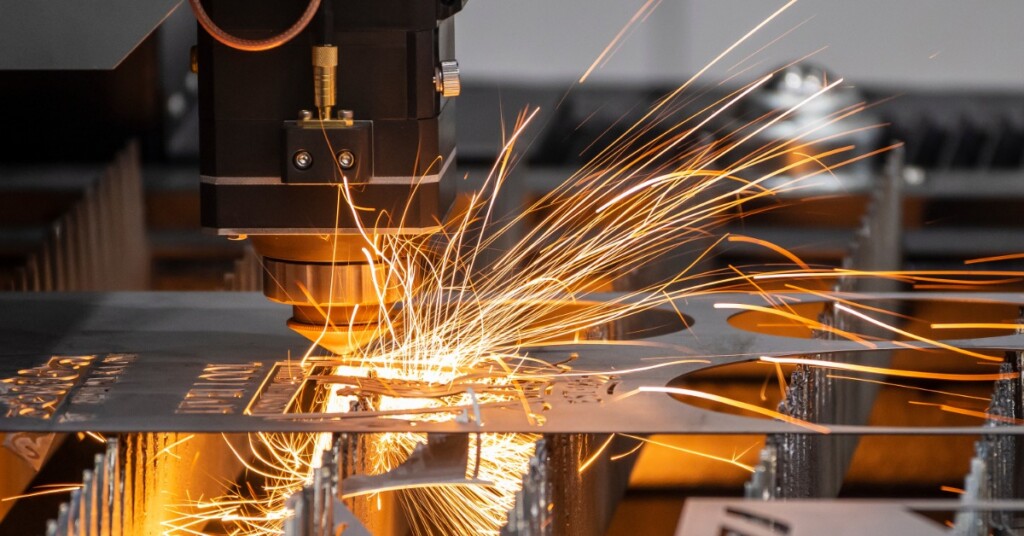
Modern manufacturers turn to laser cutting for unmatched precision, complex shapes, and multi-step fabrication. The high-powered laser beam slices cleanly through pipes and tubes, without touching or physically stressing the material. This means even thin-walled tubes avoid distortion.
When using expert laser tube cutting services, you can consolidate several production steps. A laser system quickly produces clean edges, detailed slots, and custom profiles in a single setup, cutting back on total process time. This accuracy allows pipes to fit perfectly, even in intricate aerospace or medical assemblies.
How Do You Choose the Right Cutting Method?
The method should fit your end-use goals. Structural supports may benefit from the speed and efficiency of a band saw, while highly detailed components demand the pinpoint accuracy of a laser. Understanding these four different techniques for cutting metal pipes and tubes helps you match precision, turnaround, and quality to your specific standards.
If your project demands uncompromising precision, tight timelines, and a partner who understands the complexity of large-scale fabrication, Sytech stands ready to deliver. Contact our team today to discuss your requirements and see how our expertise can help you achieve superior results.