
When you work with precision components in demanding environments, strength is never optional. Sheet metal serves as the backbone for countless applications, but it often needs reinforcement to meet high-performance standards. From industrial machinery to high-performance vehicles, nearly every sector relies on robust sheet metal designs to protect workers and assets. Overlooking proper reinforcement can lead to critical failures, costly downtime, and safety hazards.
Mastering strengthening techniques to reinforce sheet metal gives engineers, designers, and project managers the confidence that their parts will hold up under real-world stress. Each approach supports structural integrity, improves load capacity, and helps prevent distortion.
In fields as diverse as aerospace and medical devices, getting sheet metal reinforcement right means the difference between safety and failure. How you choose to reinforce your sheet metal depends on the kind of metal, what you expect from the part, and where it needs to perform. The right technique extends its service life and contributes to higher quality at every step. We’ll teach you 11 proven methods that deliver trustworthy results with sheet metal.
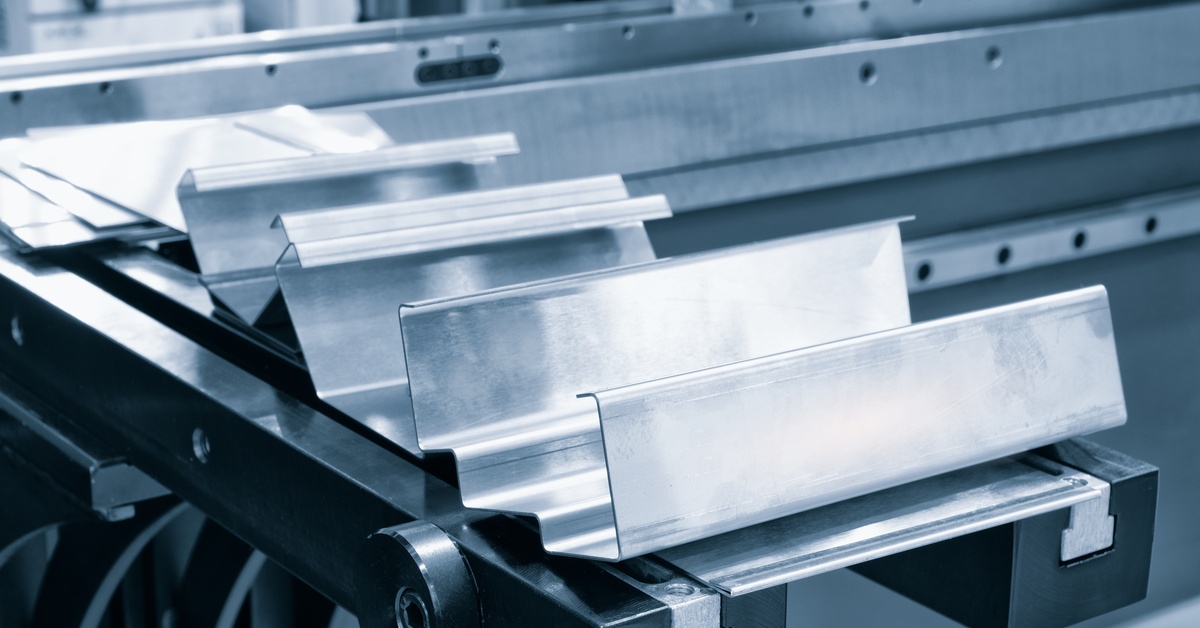
Add Bends or Flanges for Rigidity
Bends and flanges provide some of the simplest, most effective ways to stiffen a flat metal part. Without bends, a panel acts more like a floppy sheet than a functional component. Introduce a bend or run a flange along an edge, and you create a geometric feature that instantly boosts stiffness.
Think of an I-beam. Its shape channels stress away from weak points. Likewise, a basic 90-degree bend can make a big difference in panel strength. You can adjust the angle or the depth for the exact support needed, keeping your design flexible.
Use Gussets for Corner Support
Corners are common weak spots, especially in boxes or frames. Gussets, those triangular or trapezoidal support plates fixed at right angles, shore up these joints by spreading forces out. They keep frames square, even under pressure.
Weld or rivet gussets depending on load and parent material. They stay discreet but play a huge role in keeping assemblies firm and precise.
Incorporate Ribs or Beads
Ribs and beads work wonders for large, flat surfaces. These raised or indented lines are formed directly into panels using stamping or press braking. Ribs disrupt the surface, preventing flexes and vibrations.
When engineering these features, careful planning of their placement helps target the most critical load paths, maximizing support where it matters most. Adjusting the height and width lets you fine-tune stiffness without adding unnecessary weight. The distance between ribs also plays a role. Closer spacing minimizes vibrations, while strategic gaps avoid interfering with mounting points or clearance zones.
You can tailor the placement, height, and spacing of these features so the strength lands right where you need it. That’s why you’ll see ribs and beads in everything from automotive hoods to home appliances.
Select a Stronger Material or Increase Thickness
Sometimes the best solution is also the simplest—use a stronger metal or move to a thicker gauge. Swapping out standard carbon steel for high-strength, low-alloy steel, for instance, improves your part’s yield and tensile strength.
Of course, a thicker sheet naturally resists bending, but every extra millimeter adds weight and cost. Choose your materials deliberately. Consider performance, budget, and fabrication needs before pulling the trigger.
Strengthen Edges With a Hem
A hem, created by folding an edge over onto itself, serves two purposes. It removes the danger of sharp edges and thickens the profile, notably at the perimeter where panels otherwise flex.
Open, closed, and tear-drop hems all deliver different looks and levels of support, but what they have in common is that they improve the material’s strength. Doors, access panels, and enclosures benefit significantly from a strong hem along their edges.
Add Support With Welded Fasteners
For added support in specific areas, welded fasteners are indispensable. Welding studs, nuts, or standoffs to sheet metal not only anchors hardware securely but also reinforces the surrounding panel. It’s a permanent bond able to handle repeated loads.
This process is a vital aspect of sheet metal fabrication. Skilled fabricators make sure each weld is clean, minimizing heat distortion and aligning fasteners exactly as needed. When done right, this technique outperforms drilled holes, which can weaken the base metal over time.
Use Sandwich Panels or Laminates
When strength and minimal weight both matter, sandwich panels deliver. With two thin sheets bonded to a lightweight core, like honeycomb aluminum or durable foam, these panels resist flexing and take on impressive loads.
The outer sheets handle surface stresses, while the core keeps the sheets separated and absorbs shear forces. You’ll see sandwich construction in aerospace, automotive, and marine industries, where every ounce counts but nothing can give way.
Choose the Right Reinforcement for the Job
The best reinforcement method depends on the part’s function and what demands it will face. Always start with these questions.
- What loads does the part need to handle?
- Are weight and thickness restricted?
- How critical is the appearance?
- What’s the allowable budget for design and production?
- Will a mix of techniques give the best result?
Piecing together these answers gives you a clear path to the right reinforcement.
Place Reinforcements Along Load Paths
For reinforcement to work, it needs to follow the part’s natural load paths. That means putting beads, ribs, or fasteners where forces concentrate, and aligning support features perpendicular to bending stresses.
Well-placed reinforcements keep parts from flexing where they shouldn’t, letting the component do its job without unwanted surprises.
Weigh Strength Versus Weight
Stronger doesn’t always mean heavier. In sectors like automotive and aerospace, optimized designs use beads, sandwich panels, or lightweight materials to keep parts stiff without tipping the scales. While upsizing gauge thickness usually works, it’s only the best option if weight isn’t a key concern.
Balance Performance With Cost
Every project faces limits—time, money, equipment, and even the skill set of your team. Some reinforcement techniques, like bends or simple hems, are cost-effective and easy to produce. Others, like intricate sandwich constructions, require more time, tools, and money. Partner with a knowledgeable fabricator early, so you’ll weigh all the variables and find the solution that fits your specs and your budget.
These strengthening techniques to reinforce sheet metal let you push the boundaries of what’s possible in your field. Investing in well-engineered reinforcements extends the life span of your products and reduces costly failures down the road. Working with seasoned experts ensures your designs remain efficient without compromising on performance or quality. Choose each step with intention, and you’ll see the difference in results that stand up to scrutiny and last for years.