In the modern manufacturing landscape, precision, speed, and adaptability define success. Laser tube cutting embodies all three. As industries evolve toward automation and tighter tolerances, this technology has become an essential part of metal fabrication shops worldwide. Whether your operation produces automotive components, structural systems, or intricate medical assemblies, understanding how laser tube cutting fits into your workflow can make a measurable difference in both quality and productivity. So let’s get started with the ultimate guide to laser tube cutting.
What Is Laser Tube Cutting?
Before exploring its applications and benefits, you must understand what the process involves and how it fits into the broader scope of modern fabrication.
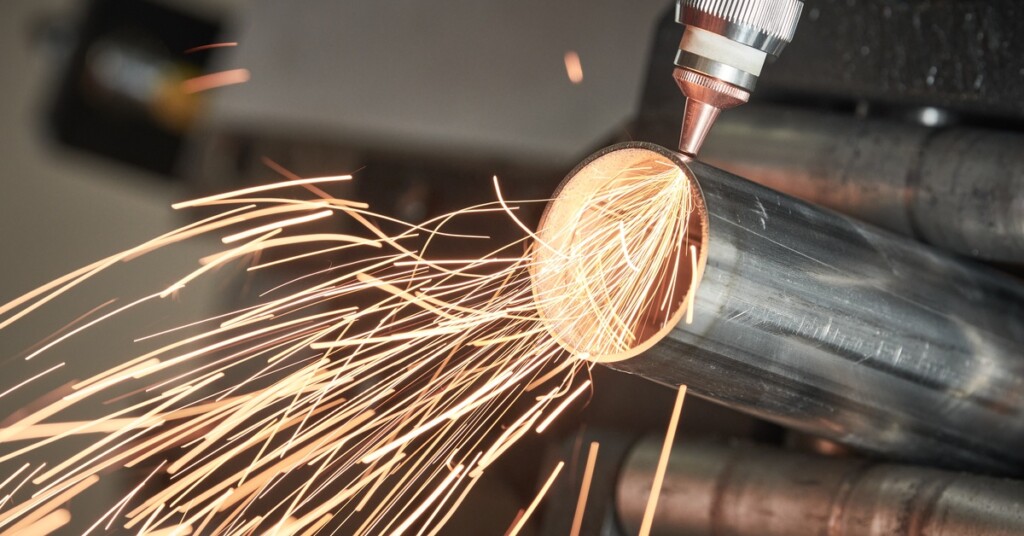
Laser tube cutting uses a focused laser beam to cut through metal tubing with exceptional accuracy. The process involves directing the beam through a CNC-controlled head that follows programmed paths, removing material without mechanical contact. Unlike saws or drills, the laser vaporizes the material along the cutting line, creating clean edges and minimal burrs.
Manufacturers use laser tube cutting for a wide range of materials, including mild steel, stainless steel, aluminum, and brass and copper alloys. Because of its non-contact nature, the process minimizes distortion and material waste, which is particularly valuable when working with thin-walled or high-strength tubing.
How Laser Tube Cutting Works
To appreciate why laser tube cutting produces such precise results, it helps to look at how the system functions from beam generation to part output.
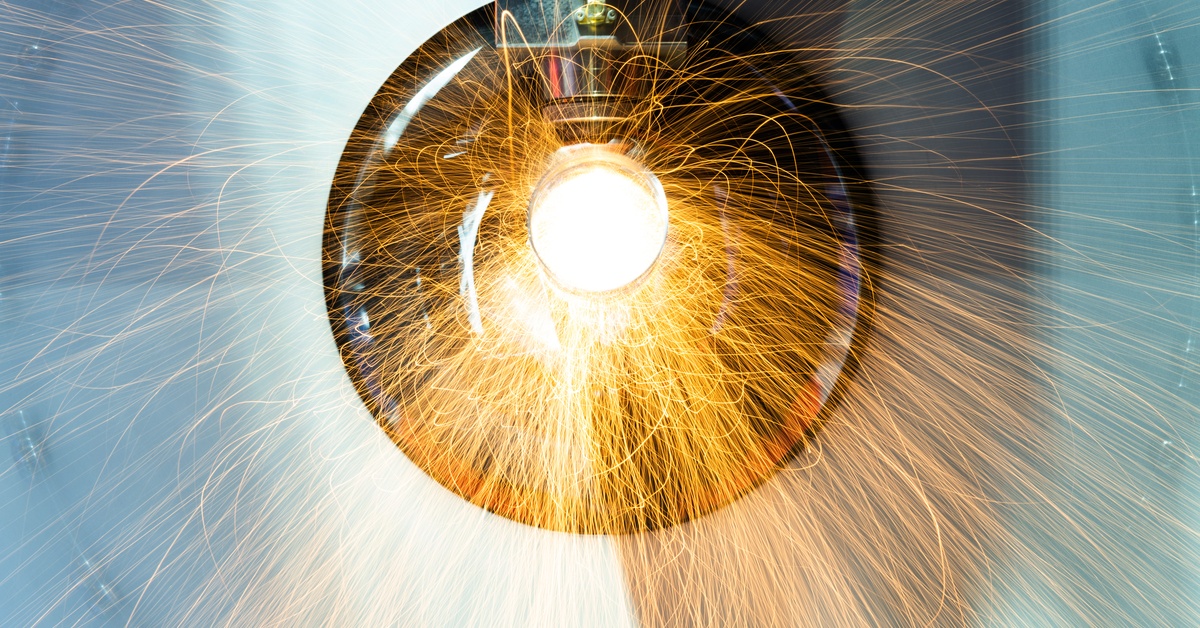
It all starts with the laser source—most commonly a fiber laser—which emits a concentrated beam that travels through optical fibers to the cutting head. There, a focusing lens narrows the beam to a fine spot.
Computer-aided design (CAD) software generates the part geometry, which the control software translates into motion commands. As the beam follows these commands, an assist gas—such as oxygen, nitrogen, or air—blows away molten metal from the cut zone.
The result is a fast, repeatable, and highly precise cutting process that supports complex geometries and high-speed production.
Fiber vs. CO₂ Lasers: Understanding the Difference
While fiber lasers dominate today’s manufacturing floors, CO₂ lasers still appear in certain specialized applications. Understanding the difference between the two technologies helps guide equipment decisions and process selection.
Fiber Lasers
Fiber lasers generate their beam through solid-state diodes, making them highly energy-efficient and well-suited for cutting metals. They require minimal maintenance and deliver strong performance across materials like steel, aluminum, and brass.
Because of these advantages, fiber laser systems have become the industry standard for metal tube cutting. Their wavelength absorbs efficiently into metallic surfaces, enabling faster processing speeds and reduced power consumption.
CO₂ Lasers
On the other hand, CO₂ lasers use a gas mixture excited by electricity. They perform well with nonmetals and certain plastics but tend to have lower efficiency and higher maintenance demands.
Why Manufacturers Choose Laser Tube Cutting
Laser tube cutting continues to gain traction across the manufacturing sector because of its ability to deliver consistent precision, operational flexibility, and cost efficiency. Each advantage contributes directly to streamlined production and better quality outcomes.
Precision and Repeatability
Every part produced through laser tube cutting follows the same programmed pattern, maintaining consistent accuracy down to fractions of a millimeter. This repeatability helps manufacturers reduce rework and maintain quality control across large production runs.
Design Flexibility
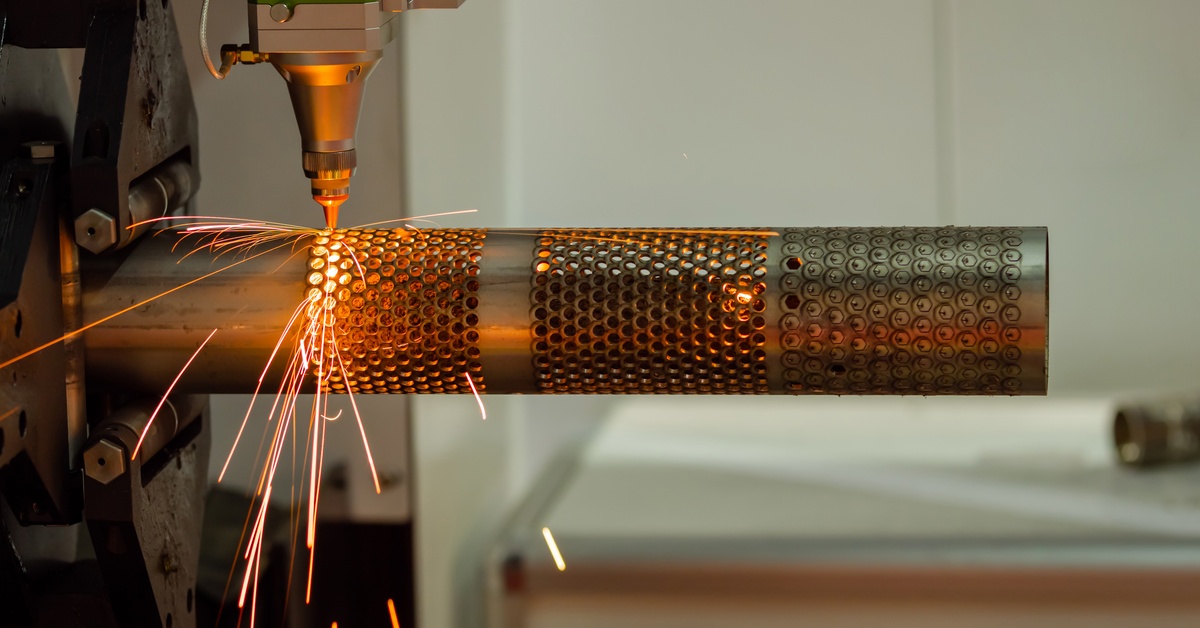
Complex geometries, beveled edges, or holes at multiple angles can be cut directly from the tube in one pass. Likewise, the ability to merge cutting, drilling, and profiling operations saves time and simplifies fixture setups.
Material Utilization
Laser programming software can nest parts and cut sequences to minimize scrap. As material costs continue to rise, this optimization contributes directly to profitability.
Automation Compatibility
Modern tube lasers integrate with robotic loading systems and smart conveyors, supporting continuous operation with minimal human intervention. This level of automation suits both high-volume production and just-in-time manufacturing models.
Applications Across Industries
Laser tube cutting impacts nearly every sector that depends on metal fabrication. Understanding where and how it applies can reveal opportunities to improve your own manufacturing process.
Some of the most common applications include the following:
- Automotive: exhaust systems, chassis components, roll cages
- Aerospace: lightweight structural frames and precision fittings
- Construction: handrails, frameworks, and architectural features
- Medical: stainless steel instruments and implantable components
- Furniture and decor: designer metalwork and modular structures
Each of these sectors values precision, repeatability, and clean finishes—qualities that laser tube cutting consistently delivers.
Common Challenges and How To Address Them
Every advanced process comes with operational challenges. Recognizing and addressing them early helps maintain efficiency and prolong machine performance.
- Tube alignment: Slight misalignment during loading can affect dimensional accuracy. Using automated centering systems corrects this before cutting begins.
- Heat management: Excessive heat in thick sections may cause edge discoloration. Adjusting cutting speed or assist gas pressure typically resolves the issue.
- Software accuracy: CAD and CAM integration must remain precise. Regular calibration between design files and machine coordinates prevents mismatch errors.
By monitoring these factors, manufacturers can maintain steady performance and high-quality output across production runs.
Partnering With a Professional
Laser tube cutting continues to redefine what’s possible in modern fabrication. Understanding its process, benefits, and future potential positions your business to take full advantage of this transformative technology.
We hope this ultimate guide to laser tube cutting has revealed its value and potential for your operations. The next step, then, is to implement the technology. But doing so involves both technical knowledge and strategic investment, which are hard to get right on your own or in-house.
Instead, partnering with an experienced manufacturer offers access to the advanced equipment and skilled professionals you need. These experts understand how to optimize every stage—from CAD modeling and programming to final inspection. A trusted partner can guide you through material selection, design feasibility, and process planning, helping your team achieve precise, repeatable results. By collaborating with specialists who focus on continuous improvement and automation, you gain more accurate cuts and a competitive edge in precision manufacturing.
So reach out to Sytech today. We offer tube laser cutting services, and we’ll work with you to meet and exceed your manufacturing needs. Get in touch to discuss your project’s specifics, and get ready to experience a new era of manufacturing accuracy and quality.